The Cradle of Western Civilization
From the Golden Age of Pericles to the modern metropolis, every stone in Athens tells a story.
Table of Contents
The Mythical Origins
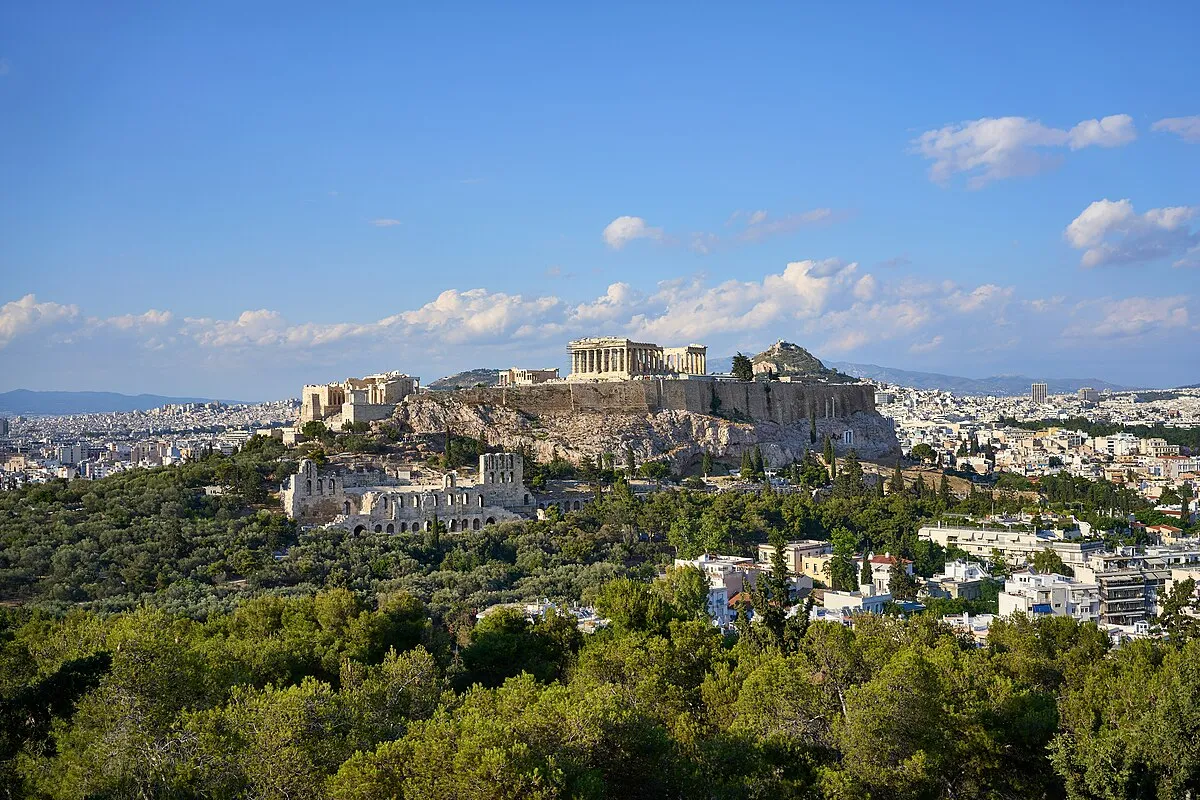
Legend has it that Athens received its name after a contest between two gods. Poseidon struck the rock of the Acropolis with his trident, creating a salt spring (symbolizing naval power). Athena, goddess of wisdom, planted an olive tree (symbolizing peace and prosperity). The citizens chose Athena, and the city was named in her honor. As your bus circles the Acropolis rock, you are literally driving around the stage of this mythical battle.
These myths aren't just stories; they shaped the geography you see today. The hills of Athens—Lycabettus, Philopappos, the Pnyx—are steeped in lore. Listening to the audio guide, you'll learn how these myths informed the architecture, festivals, and identity of the ancient Athenians, a people who believed they were 'autocthonous'—born from the earth of Attica itself.
The Golden Age & The Acropolis
The 5th century BC was the 'Golden Age' of Pericles, a time of explosion in arts, philosophy, and democracy. The visible result of this era is the Acropolis. When the bus stops at the base of the hill, you are looking up at the Parthenon, a temple built with such mathematical precision that it has baffled architects for centuries. It was the treasury of the Delian League and the spiritual center of the city.
Just below the Parthenon lies the Theater of Dionysus, where the plays of Sophocles, Euripides, and Aristophanes were first performed. Imagine sitting on the top deck of the bus, looking down at the very spot where tragedy and comedy were invented. Nearby is the Odeon of Herodes Atticus, a Roman-era theater still used today for concerts—you might even catch a show during the Athens Festival.
Roman Athens & Hadrian's Love
Athens was conquered by Rome, but the Romans were conquered by Athenian culture. Emperor Hadrian, a true philhellene, transformed the city. You will pass Hadrian's Arch, a monumental gateway that marked the boundary between the ancient Greek city and Hadrian's new Roman city. The inscription on the arch famously reads 'This is Athens, the ancient city of Theseus' on one side, and 'This is the city of Hadrian, and not of Theseus' on the other.
The Temple of Olympian Zeus, which took over 600 years to complete, was finally finished by Hadrian. Its gigantic Corinthian columns—some of which have fallen—are a highlight of the bus route. The Romans also left us the Roman Agora and the Tower of the Winds in Plaka, considered the world's first meteorological station.
Byzantine & Ottoman Layers
History didn't stop in antiquity. Athens has a rich Byzantine heritage. Keep your eyes peeled for tiny, domed churches sitting oddly in the shadow of modern office blocks, like Kapnikarea on Ermou Street or the Little Metropolis near the Cathedral. These gems from the 11th and 12th centuries showcase intricate masonry and periods of deep religious devotion.
During the Ottoman occupation, the Parthenon became a mosque, and the Erechtheion a harem. While many Ottoman structures were removed after independence, traces remain, such as the Fethiye Mosque in the Roman Agora and the functioning Tzistarakis Mosque in Monastiraki Square (now a ceramics museum). The chaotic, vibrant layout of the Plaka and Monastiraki districts largely reflects this period of bazaars and winding streets.
The Neoclassical Rebirth
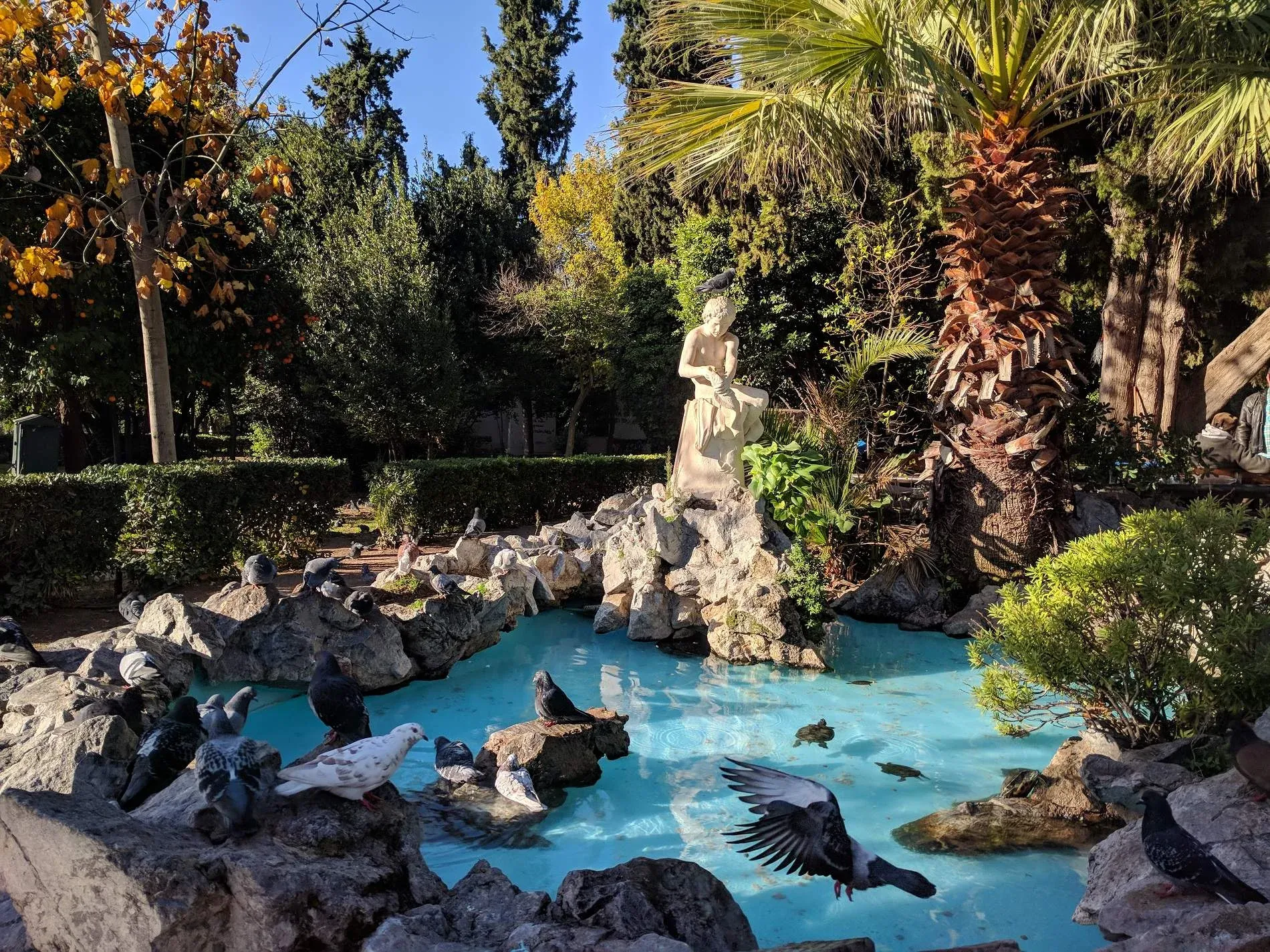
When Athens became the capital of the modern Greek state in 1834, it was a small town. King Otto and European architects reimagined it as a neoclassical metropolis. The result is the 'Neoclassical Trilogy' on Panepistimiou Street, which the bus passes slowly for photos: the National Library, the University, and the Academy. With their statues of Apollo and Athena on high columns, they are 19th-century tributes to ancient glory.
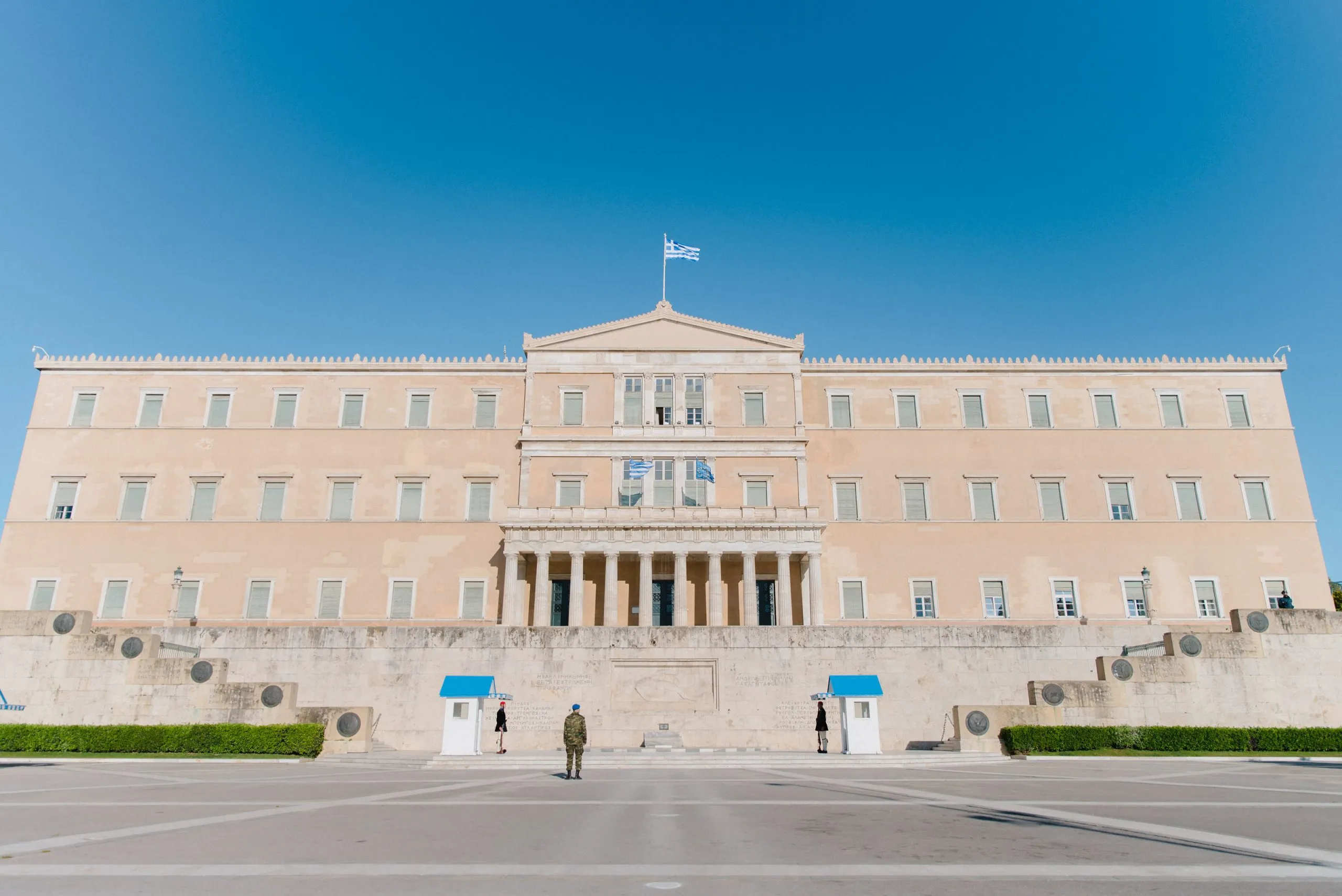
Syntagma Square (Constitution Square) is dominated by the Old Royal Palace, now the Hellenic Parliament. Driving through these broad avenues, you see the ambition of modern Greece to reclaim its heritage. The contrast between these orderly, majestic buildings and the organic sprawl of the older neighborhoods is striking.
Syntagma & The Modern State
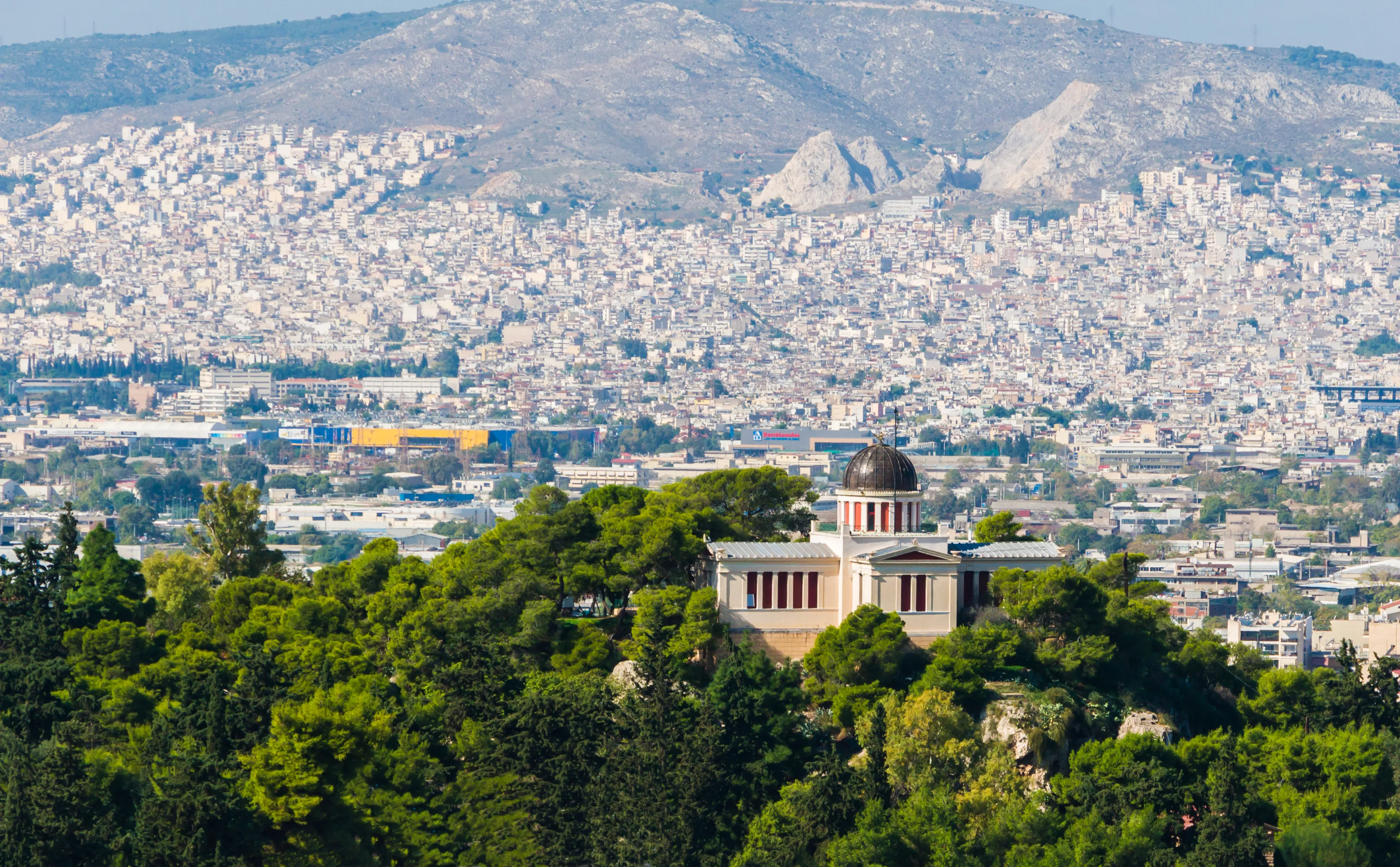
Syntagma is the focal point of modern Athens. It's where protests happen, where concerts are held, and where every traveler ends up. The Tomb of the Unknown Soldier in front of the Parliament is a must-see. The Evzones (Presidential Guard) stand motionless for an hour, dressed in traditional uniform—fustanella (kilt) with 400 pleats and pom-pom shoes (tsarouchia). The changing of the guard is a piece of living theater.
From the bus, you'll see the life of the city unfolding around the square: luxury hotels like the Grande Bretagne (historically a nest of spies during WWII), busy metro entrances, and locals rushing to work. It's a reminder that Athens is not just a museum, but a bustling, sometimes gritty, always lively European capital.
Piraeus: The Ancient Port
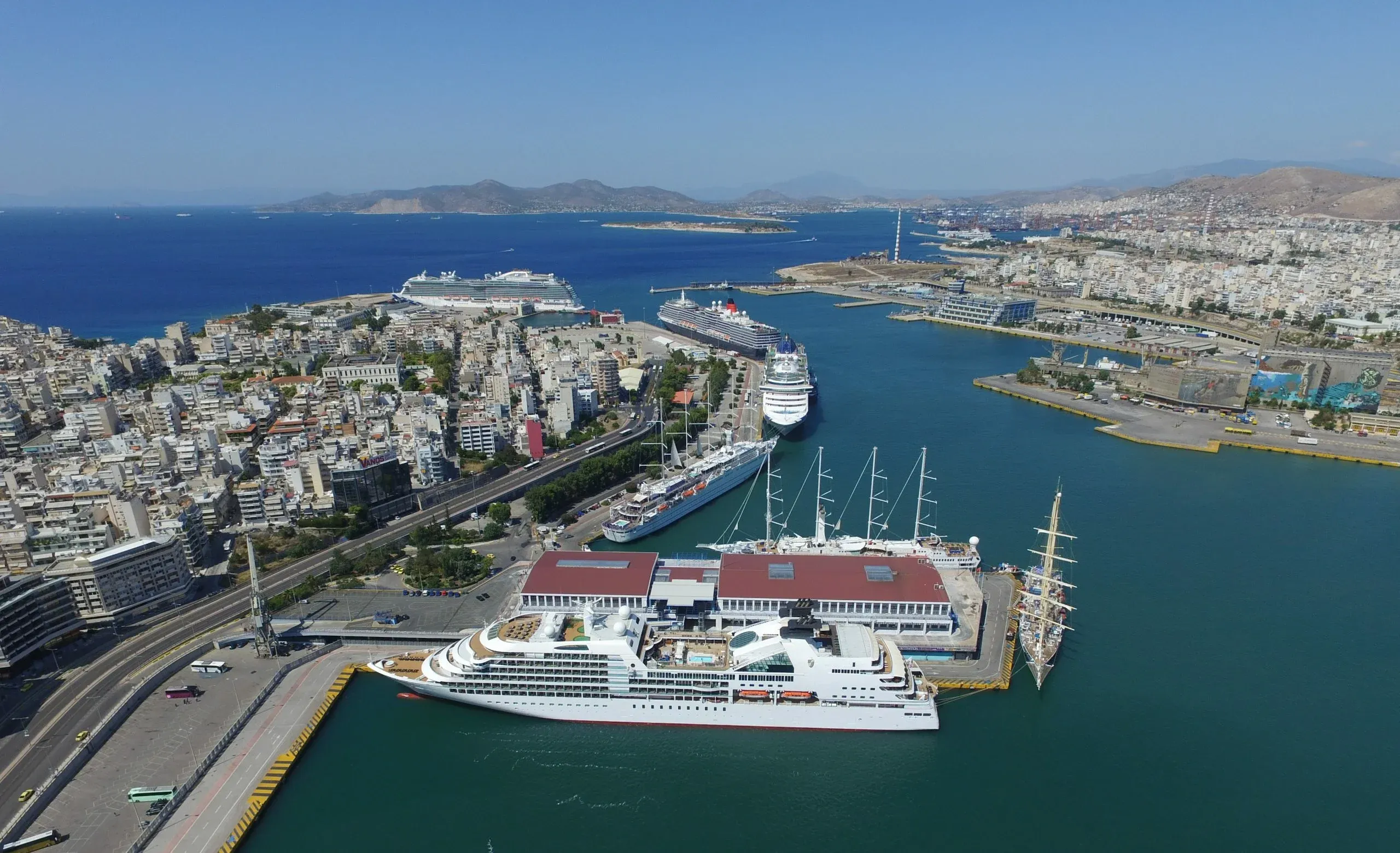
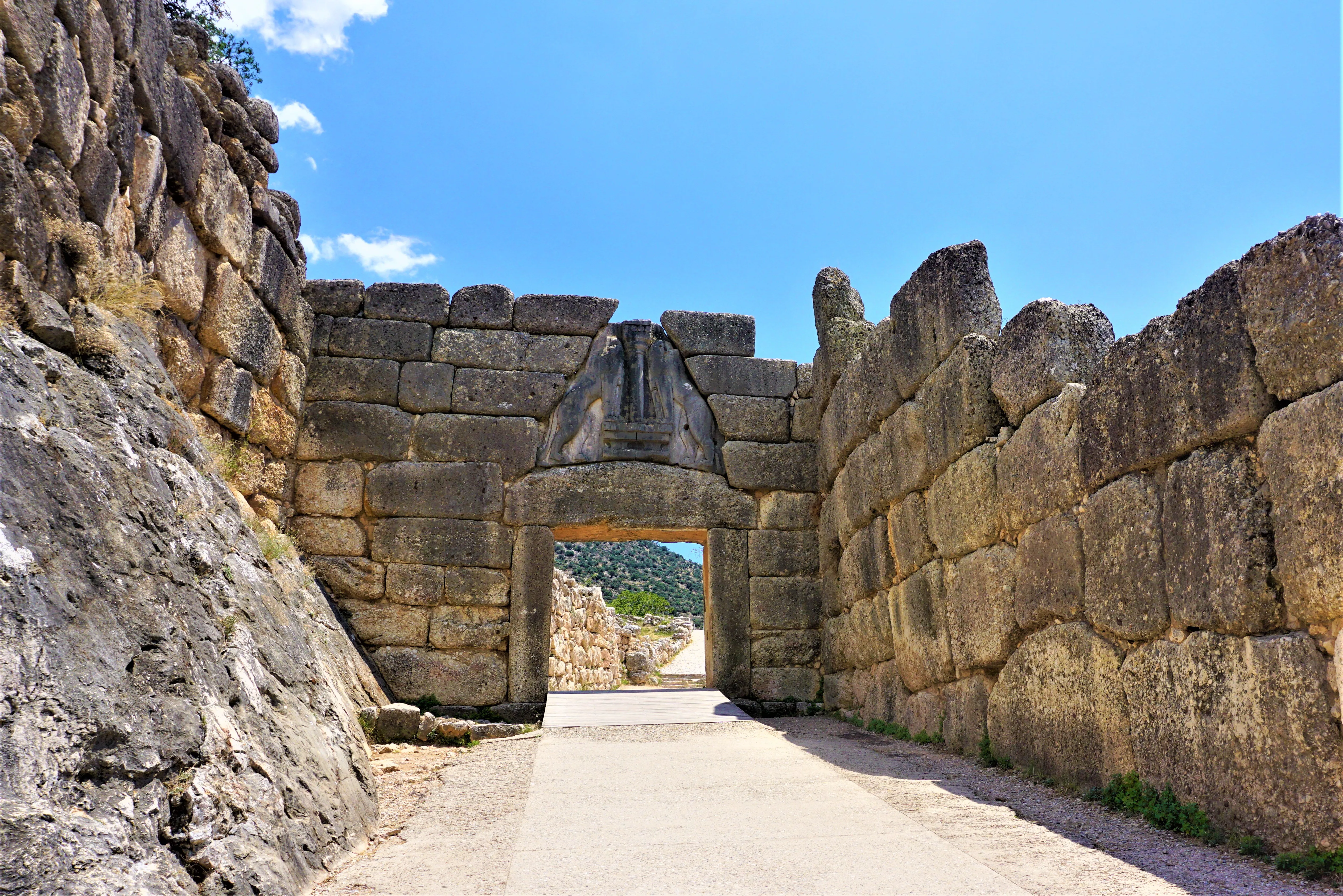
Piraeus has been the port of Athens since antiquity. Themistocles built the Long Walls to connect the city to the sea, ensuring Athens could never be starved out as long as it ruled the waves. Today, taking the 'Piraeus Line' bus follows a similar path. You'll switch from the urban density of Athens to the maritime hustle of one of Europe's busiest passenger ports.
It's not just about ferries. Piraeus has its own beauty, particularly around the smaller harbors of Mikrolimano and Pasalimani, lined with seafood tavernas and luxury yachts. The bus ride offers a glimpse into the shipping industry that drives much of the Greek economy, and the Archaeological Museum of Piraeus is a hidden gem often overlooked by tourists.
The Riviera & Coastal Life
Many visitors are surprised to learn that Athens has a Riviera. Just 30 minutes from the Acropolis, you can be at a sandy beach. The 'Beach Line' bus takes you down the coast through Palaio Faliro, Alimos, Glyfada, and Vouliagmeni. This is where Athenians come to breathe. The vibe shifts from historical intensity to seaside relaxation.
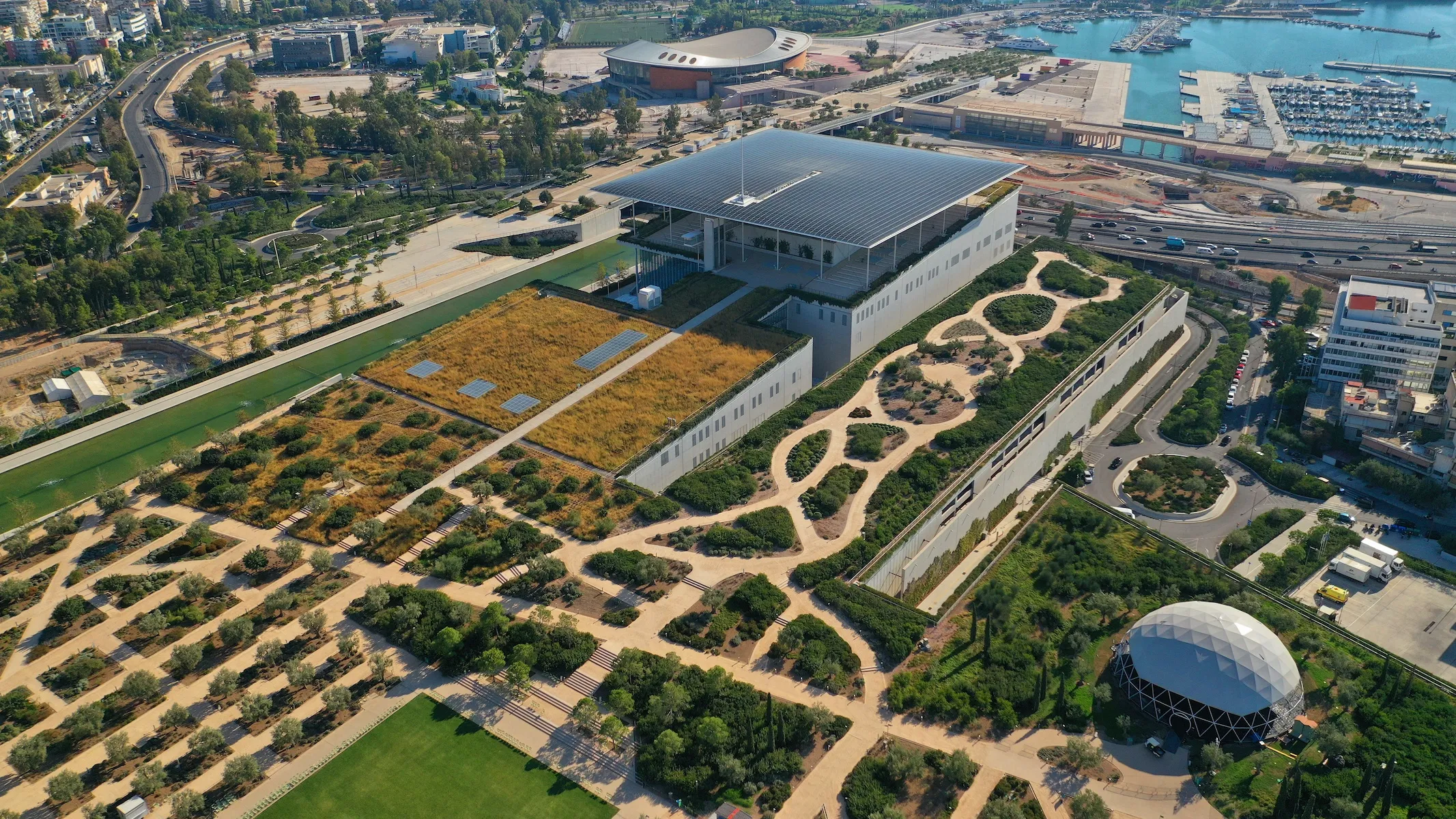
You'll pass the impressive Stavros Niarchos Foundation Cultural Center (SNFCC), a masterpiece of modern architecture housing the National Opera and Library. Further down, you enter the sophisticated suburb of Glyfada, known for high-end shopping and dining. If you have a multi-day ticket, spending an afternoon hopping off for a swim at Vouliagmeni Lake (a geological wonder with healing thermal waters) is unforgettable.
Food, Culture & Nightlife
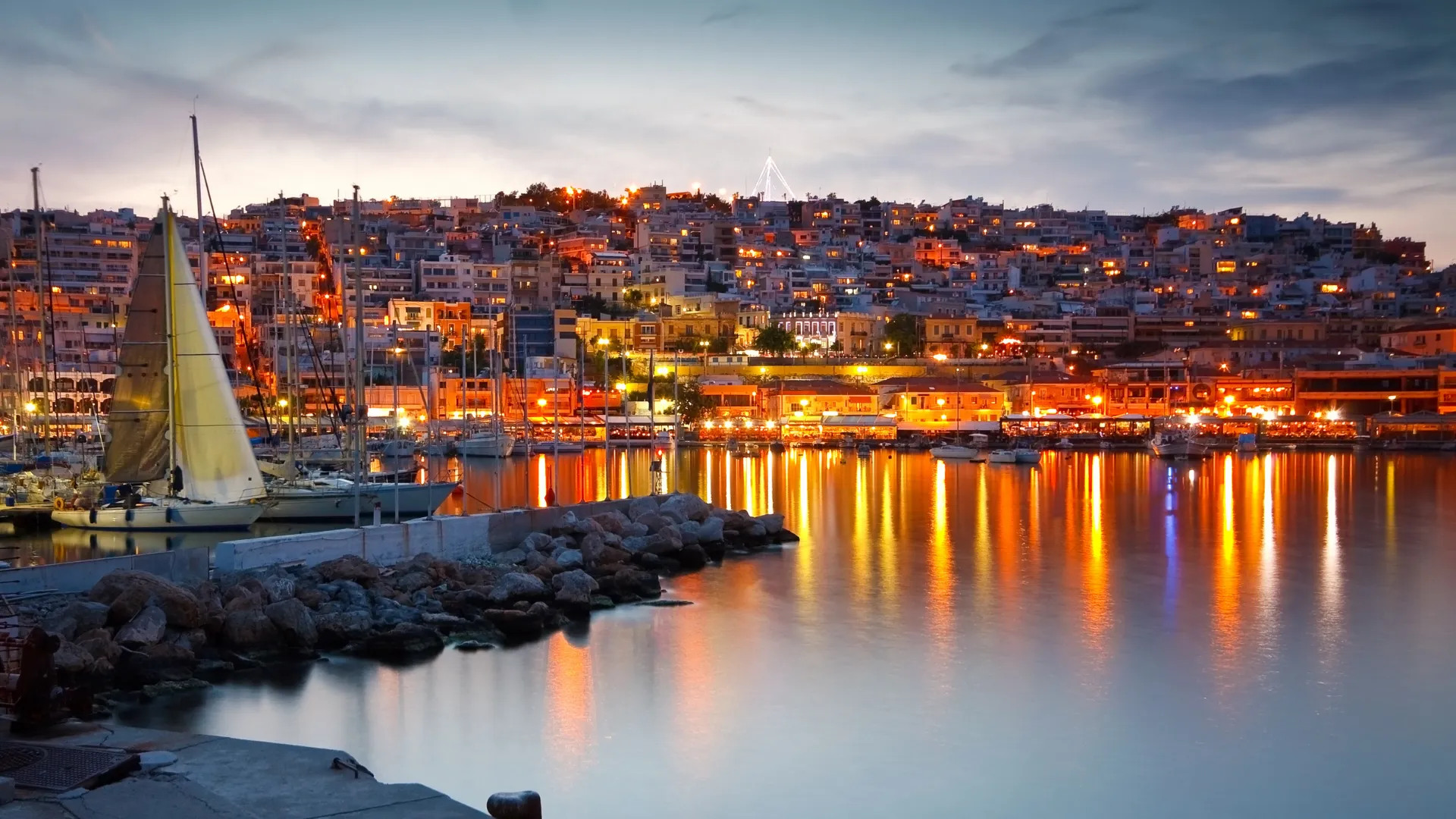
You cannot understand Athens without tasting it. As the bus drives through Thissio and Psyri, you are looking at the nightlife hubs. Athens rarely sleeps. Coffee culture is a religion here; the 'freddo espresso' is the fuel of the city. In the evening, these areas transform with bars, live Rembetiko music (the 'Greek blues'), and rooftop restaurants offering illuminated views of the Acropolis.
While on the bus, note the location of the Central Market (Varvakios). It's a sensory explosion of meat, fish, and spices. Hopping off here to wander the stalls is an adventure for your nose and camera. Try a 'koulouri' (sesame bread ring) from a street vendor—it's the ultimate Athenian snack.
Accessibility & Practicalities
Athens has made strides in accessibility, largely driven by the 2004 Olympics. The sightseeing buses are wheelchair friendly. However, the city itself can be challenging with uneven sidewalks and parked cars. The area around the Acropolis (Dionysiou Areopagitou) is pedestrianized and smooth, making it the most wheelchair-friendly part of the historic center.
Safety-wise, Athens is very safe, but pickpockets are active on the metro and in crowded tourist spots. The upper deck of the bus is a safe haven where you can relax without clutching your bag constantly. Just remember to wear a hat—the Greek sun is relentless.
Best Photo Spots on the Route
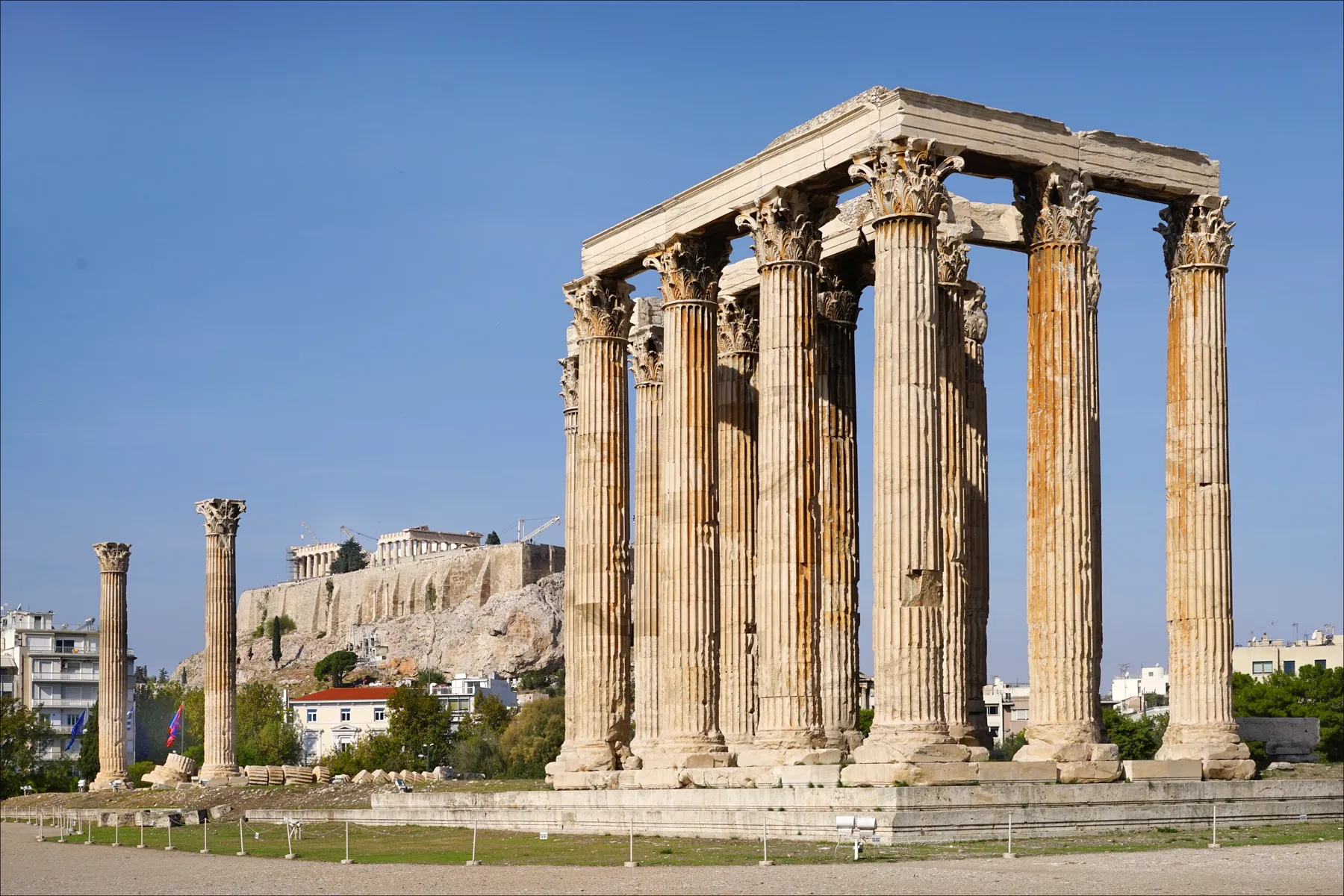
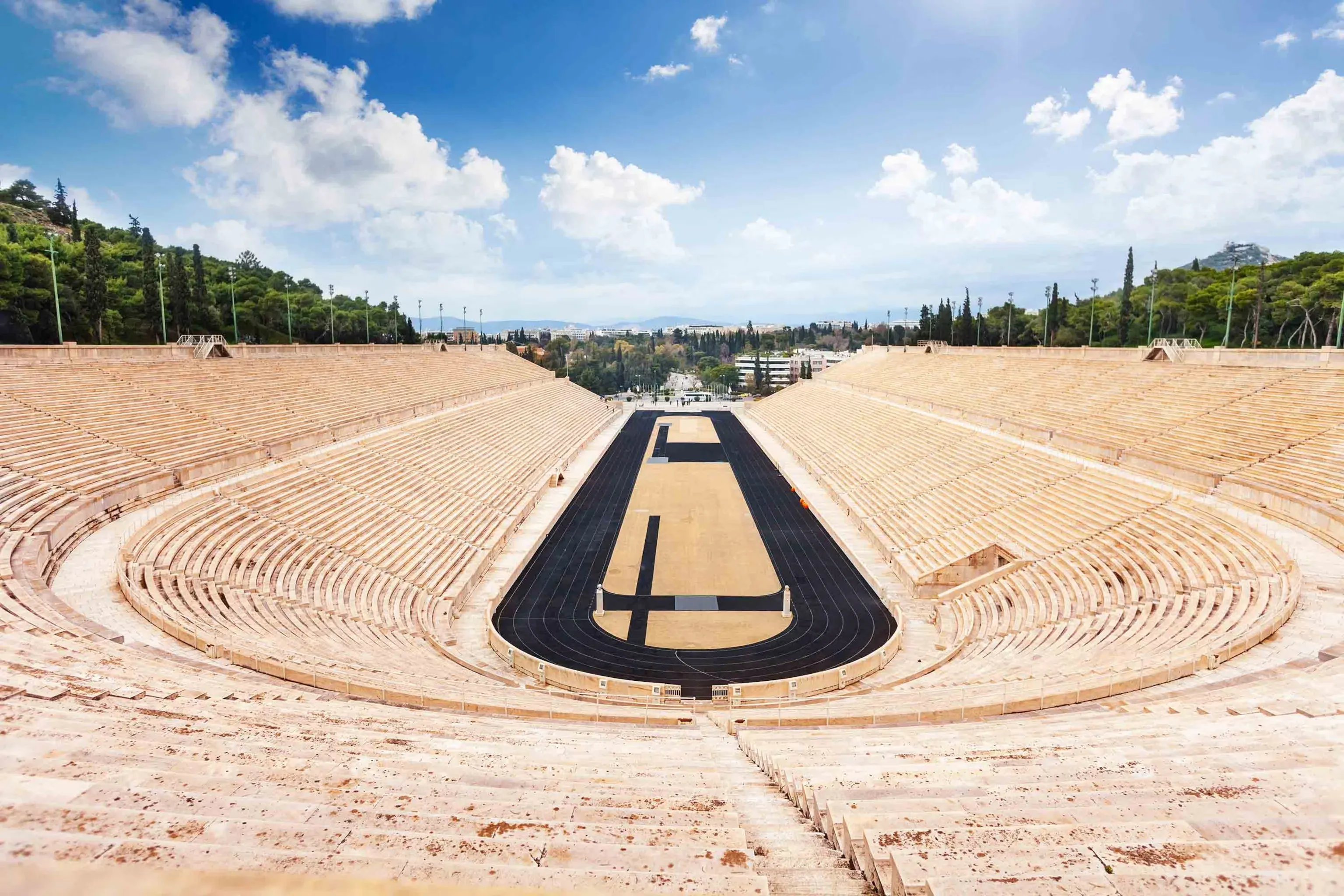
Keep your camera ready! The best shot of the Acropolis isn't from the bottom, but from the bus as it circles the Temple of Olympian Zeus—you get the pillars in the foreground and the Parthenon in the back. Another prime spot is passing the Panathenaic Stadium; the white marble is blindingly beautiful in the sun.
If you take the Riviera line, the sunset views over the Saronic Gulf are spectacular. Sit on the right side of the bus heading south for the best sea views. And don't forget the Changing of the Guard—the bus slows down near Parliament, giving you a decent vantage point above the crowds.
Day Trips from Athens
While the city bus keeps you local, many operators offer extensions to Cape Sounion to see the Temple of Poseidon at sunset. It's a magical trip down the coast. Delphi, the 'navel of the world', and the islands of Hydra, Poros, and Aegina are also popular day trips that can often be booked in combo with your bus pass.
Using the bus as your base for a few days lets you structure these trips efficiently. Do the heavy sightseeing in Athens on day 1 and 2, then use the 3rd day of your pass to relax on the Riviera or take a tour out of the city.
Why the Bus is Your Historian
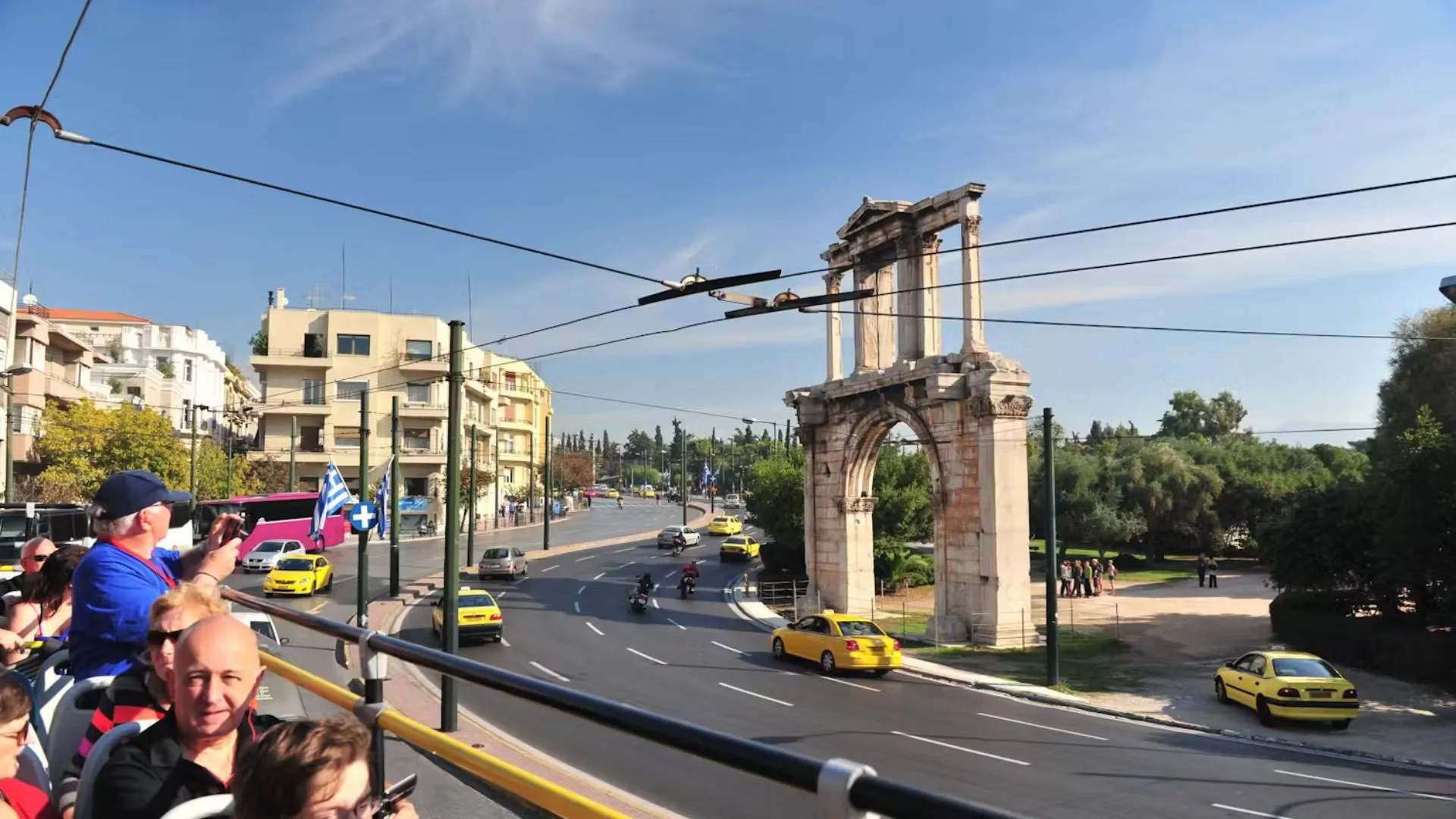
Athens is dense. Without a guide, it can look like a sea of concrete interrupted by ruins. The audio commentary on the bus is crucial context. It explains why a pile of rocks is significant, tells you the gossip of ancient gods, and connects the timeline from Pericles to today. It turns a chaotic city into a narrative.
Riding the bus is also a meditation. In a city that moves at a frantic pace, sitting on the upper deck, moving slowly through traffic, allows you to observe the details—the neoclassical balconies, the street art, the orange trees lining the sidewalks—that you'd miss in a taxi or underground on the metro.
Table of Contents
The Mythical Origins
Legend has it that Athens received its name after a contest between two gods. Poseidon struck the rock of the Acropolis with his trident, creating a salt spring (symbolizing naval power). Athena, goddess of wisdom, planted an olive tree (symbolizing peace and prosperity). The citizens chose Athena, and the city was named in her honor. As your bus circles the Acropolis rock, you are literally driving around the stage of this mythical battle.
These myths aren't just stories; they shaped the geography you see today. The hills of Athens—Lycabettus, Philopappos, the Pnyx—are steeped in lore. Listening to the audio guide, you'll learn how these myths informed the architecture, festivals, and identity of the ancient Athenians, a people who believed they were 'autocthonous'—born from the earth of Attica itself.
The Golden Age & The Acropolis
The 5th century BC was the 'Golden Age' of Pericles, a time of explosion in arts, philosophy, and democracy. The visible result of this era is the Acropolis. When the bus stops at the base of the hill, you are looking up at the Parthenon, a temple built with such mathematical precision that it has baffled architects for centuries. It was the treasury of the Delian League and the spiritual center of the city.
Just below the Parthenon lies the Theater of Dionysus, where the plays of Sophocles, Euripides, and Aristophanes were first performed. Imagine sitting on the top deck of the bus, looking down at the very spot where tragedy and comedy were invented. Nearby is the Odeon of Herodes Atticus, a Roman-era theater still used today for concerts—you might even catch a show during the Athens Festival.
Roman Athens & Hadrian's Love
Athens was conquered by Rome, but the Romans were conquered by Athenian culture. Emperor Hadrian, a true philhellene, transformed the city. You will pass Hadrian's Arch, a monumental gateway that marked the boundary between the ancient Greek city and Hadrian's new Roman city. The inscription on the arch famously reads 'This is Athens, the ancient city of Theseus' on one side, and 'This is the city of Hadrian, and not of Theseus' on the other.
The Temple of Olympian Zeus, which took over 600 years to complete, was finally finished by Hadrian. Its gigantic Corinthian columns—some of which have fallen—are a highlight of the bus route. The Romans also left us the Roman Agora and the Tower of the Winds in Plaka, considered the world's first meteorological station.
Byzantine & Ottoman Layers
History didn't stop in antiquity. Athens has a rich Byzantine heritage. Keep your eyes peeled for tiny, domed churches sitting oddly in the shadow of modern office blocks, like Kapnikarea on Ermou Street or the Little Metropolis near the Cathedral. These gems from the 11th and 12th centuries showcase intricate masonry and periods of deep religious devotion.
During the Ottoman occupation, the Parthenon became a mosque, and the Erechtheion a harem. While many Ottoman structures were removed after independence, traces remain, such as the Fethiye Mosque in the Roman Agora and the functioning Tzistarakis Mosque in Monastiraki Square (now a ceramics museum). The chaotic, vibrant layout of the Plaka and Monastiraki districts largely reflects this period of bazaars and winding streets.
The Neoclassical Rebirth
When Athens became the capital of the modern Greek state in 1834, it was a small town. King Otto and European architects reimagined it as a neoclassical metropolis. The result is the 'Neoclassical Trilogy' on Panepistimiou Street, which the bus passes slowly for photos: the National Library, the University, and the Academy. With their statues of Apollo and Athena on high columns, they are 19th-century tributes to ancient glory.
Syntagma Square (Constitution Square) is dominated by the Old Royal Palace, now the Hellenic Parliament. Driving through these broad avenues, you see the ambition of modern Greece to reclaim its heritage. The contrast between these orderly, majestic buildings and the organic sprawl of the older neighborhoods is striking.
Syntagma & The Modern State
Syntagma is the focal point of modern Athens. It's where protests happen, where concerts are held, and where every traveler ends up. The Tomb of the Unknown Soldier in front of the Parliament is a must-see. The Evzones (Presidential Guard) stand motionless for an hour, dressed in traditional uniform—fustanella (kilt) with 400 pleats and pom-pom shoes (tsarouchia). The changing of the guard is a piece of living theater.
From the bus, you'll see the life of the city unfolding around the square: luxury hotels like the Grande Bretagne (historically a nest of spies during WWII), busy metro entrances, and locals rushing to work. It's a reminder that Athens is not just a museum, but a bustling, sometimes gritty, always lively European capital.
Piraeus: The Ancient Port
Piraeus has been the port of Athens since antiquity. Themistocles built the Long Walls to connect the city to the sea, ensuring Athens could never be starved out as long as it ruled the waves. Today, taking the 'Piraeus Line' bus follows a similar path. You'll switch from the urban density of Athens to the maritime hustle of one of Europe's busiest passenger ports.
It's not just about ferries. Piraeus has its own beauty, particularly around the smaller harbors of Mikrolimano and Pasalimani, lined with seafood tavernas and luxury yachts. The bus ride offers a glimpse into the shipping industry that drives much of the Greek economy, and the Archaeological Museum of Piraeus is a hidden gem often overlooked by tourists.
The Riviera & Coastal Life
Many visitors are surprised to learn that Athens has a Riviera. Just 30 minutes from the Acropolis, you can be at a sandy beach. The 'Beach Line' bus takes you down the coast through Palaio Faliro, Alimos, Glyfada, and Vouliagmeni. This is where Athenians come to breathe. The vibe shifts from historical intensity to seaside relaxation.
You'll pass the impressive Stavros Niarchos Foundation Cultural Center (SNFCC), a masterpiece of modern architecture housing the National Opera and Library. Further down, you enter the sophisticated suburb of Glyfada, known for high-end shopping and dining. If you have a multi-day ticket, spending an afternoon hopping off for a swim at Vouliagmeni Lake (a geological wonder with healing thermal waters) is unforgettable.
Food, Culture & Nightlife
You cannot understand Athens without tasting it. As the bus drives through Thissio and Psyri, you are looking at the nightlife hubs. Athens rarely sleeps. Coffee culture is a religion here; the 'freddo espresso' is the fuel of the city. In the evening, these areas transform with bars, live Rembetiko music (the 'Greek blues'), and rooftop restaurants offering illuminated views of the Acropolis.
While on the bus, note the location of the Central Market (Varvakios). It's a sensory explosion of meat, fish, and spices. Hopping off here to wander the stalls is an adventure for your nose and camera. Try a 'koulouri' (sesame bread ring) from a street vendor—it's the ultimate Athenian snack.
Accessibility & Practicalities
Athens has made strides in accessibility, largely driven by the 2004 Olympics. The sightseeing buses are wheelchair friendly. However, the city itself can be challenging with uneven sidewalks and parked cars. The area around the Acropolis (Dionysiou Areopagitou) is pedestrianized and smooth, making it the most wheelchair-friendly part of the historic center.
Safety-wise, Athens is very safe, but pickpockets are active on the metro and in crowded tourist spots. The upper deck of the bus is a safe haven where you can relax without clutching your bag constantly. Just remember to wear a hat—the Greek sun is relentless.
Best Photo Spots on the Route
Keep your camera ready! The best shot of the Acropolis isn't from the bottom, but from the bus as it circles the Temple of Olympian Zeus—you get the pillars in the foreground and the Parthenon in the back. Another prime spot is passing the Panathenaic Stadium; the white marble is blindingly beautiful in the sun.
If you take the Riviera line, the sunset views over the Saronic Gulf are spectacular. Sit on the right side of the bus heading south for the best sea views. And don't forget the Changing of the Guard—the bus slows down near Parliament, giving you a decent vantage point above the crowds.
Day Trips from Athens
While the city bus keeps you local, many operators offer extensions to Cape Sounion to see the Temple of Poseidon at sunset. It's a magical trip down the coast. Delphi, the 'navel of the world', and the islands of Hydra, Poros, and Aegina are also popular day trips that can often be booked in combo with your bus pass.
Using the bus as your base for a few days lets you structure these trips efficiently. Do the heavy sightseeing in Athens on day 1 and 2, then use the 3rd day of your pass to relax on the Riviera or take a tour out of the city.
Why the Bus is Your Historian
Athens is dense. Without a guide, it can look like a sea of concrete interrupted by ruins. The audio commentary on the bus is crucial context. It explains why a pile of rocks is significant, tells you the gossip of ancient gods, and connects the timeline from Pericles to today. It turns a chaotic city into a narrative.
Riding the bus is also a meditation. In a city that moves at a frantic pace, sitting on the upper deck, moving slowly through traffic, allows you to observe the details—the neoclassical balconies, the street art, the orange trees lining the sidewalks—that you'd miss in a taxi or underground on the metro.